Commercial Waste in Raynes Park
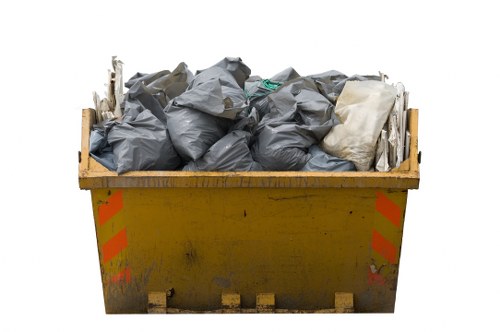
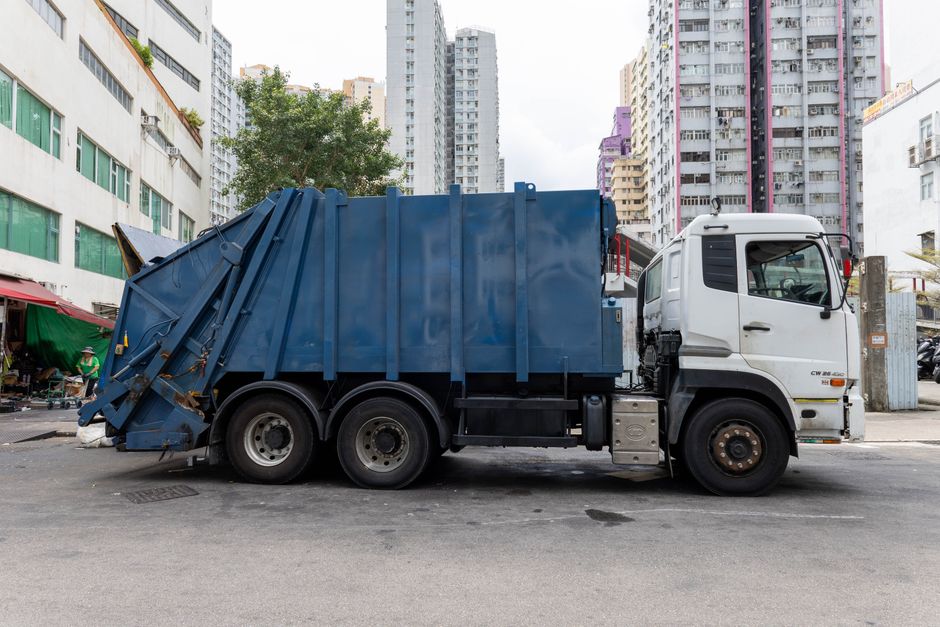
Commercial waste in Raynes Park needs a practical, regular approach that keeps premises clear, waste streams separated and collections aligned with how your business actually operates. Whether you run a shop, office, café, workshop or shared workspace, the right service should handle everyday refuse, recurring commercial bags and bulkier items with minimal disruption. We provide commercial waste removal arranged around the needs of local businesses, with straightforward options for different types of waste and collection patterns.
Our service is built for organisations that want a reliable route for general business waste, cardboard, mixed recyclables and other routine material that builds up during trading. We can also support related disposal needs where items are too large for normal bins, including office furniture, unwanted appliances and clear-outs linked to moves or refurbishments. If you are comparing options, the key is matching the collection to the waste you actually produce rather than paying for a service that is too broad or too limited.
Use this page to understand the main service, the available supporting options and the information that helps us prepare a sensible quotation. If you already know what needs removing, you can keep the next step simple: tell us the type of waste, the amount and how often it appears, then request a quotation when you are ready.
Regular business waste collection
Regular business waste collection is the core of most commercial arrangements, and it works best when the waste stream is defined clearly. Mixed rubbish, food packaging, paper, office consumables and lightweight general waste all need different handling depending on how they are produced and how often they appear. A good collection plan keeps these streams manageable without forcing you to over-order capacity or leave waste building up between visits.
For many premises, the practical challenge is not just volume but consistency. A small office may produce a steady flow of paper and packaging, while a hospitality venue may need help with sacks, cardboard and front-of-house waste after busy periods. Our approach to business waste removal focuses on making those routine collections easier to plan, so you can keep trading space tidy and avoid unnecessary clutter at the point of use.
What a business collection can cover
Business waste can include bagged general rubbish, packaging, paper, light plastics and mixed material that is safe to collect within a commercial load. Where the waste is mainly dry and ordinary, collections can usually be planned around access, timing and the amount produced. If your premises have separate areas for storage or back-of-house sorting, that can help make the process cleaner and simpler.
Office and workplace clearances
Office waste often needs a different kind of removal because it may include desks, chairs, cabinets, screens, files and equipment that are no longer wanted together. A workplace clearance can deal with a single room, a storage area or a larger change in layout, and it is often useful when upgrading furniture or reducing surplus items after a reorganisation. The aim is to remove the unwanted material without disturbing the rest of the premises more than necessary.
If you are clearing workstations or shared rooms, it helps to separate items that are reusable, recyclable or confidential before collection day. We can remove general office contents alongside larger objects, and where paperwork is involved we also offer confidential shredding as a separate service for material that needs secure destruction. That distinction matters because not every office item should be treated the same way.
A well-planned office clearance is usually about access, volume and sequencing. Telling us which floors or rooms are involved, whether there are lifts or stairs, and how much furniture or bagged waste is ready to go allows the work to be organised efficiently. Clear information first makes the quotation process more accurate and helps keep the collection focused on the items that actually need taking away.
Furniture and bulky item disposal
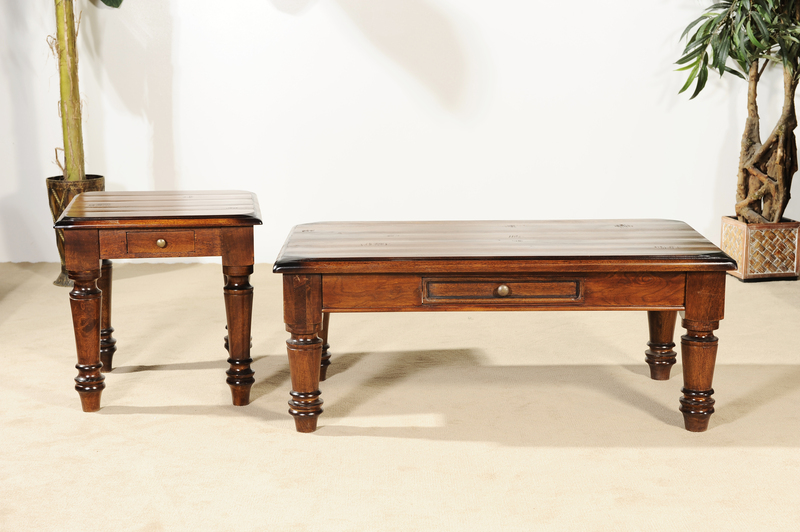
Furniture disposal is a common part of commercial waste work because businesses regularly replace chairs, tables, cabinets, shelving and soft furnishings. These items are often too awkward to leave in ordinary waste areas, yet they still need to be removed in a controlled way. We can help with unwanted items that have reached the end of their use, whether they came from an office, waiting room, staff area or commercial storage space.
Where bulky furniture is mixed with other waste, it is useful to separate the larger pieces from the loose material so the collection can be planned around what will be lifted, carried and loaded. You may want to look at furniture disposal for items that are being removed as stand-alone objects, and furniture clearance where a wider group of furnishings needs taking away together. Both options support a cleaner way to deal with larger commercial items.
Items made from wood, metal, fabric and mixed materials may be handled differently depending on condition and recycling potential. We do not assume every piece belongs in the same stream, so a sensible quotation depends on the sort of furniture involved, the access available and whether it is loose, dismantled or still assembled. That practical detail often makes the difference between a simple load and a more involved clearance.
Builders waste and refurbishment debris

Builders waste clearance is useful when commercial premises are being altered, repaired or refreshed and the work produces rubble, packaging, timber offcuts, old fixtures or mixed site debris. The waste may come from a shop fit-out, a small office refit, internal repair work or the removal of outdated fittings. The important point is to keep trade debris separate from general business rubbish so disposal can be arranged appropriately.
Where the material comes from a project rather than day-to-day operations, collections often need more careful preparation because the load can include mixed objects rather than one straightforward waste stream. Our builders waste clearance service is relevant when the work area contains leftover construction materials, while waste removal covers the broader collection of mixed non-hazardous items that businesses need to move out efficiently.
If you are arranging this kind of clearance, it helps to identify whether the load includes plasterboard, timber, tiles, packaging or fixtures. That is not just administrative detail: it affects how the waste is loaded and what can be handled together. Better sorting at source usually means a more straightforward collection and a clearer quotation.
Household-style commercial clearances
Some business premises generate waste that is closer to household contents than office rubbish, especially where a property is used for staff accommodation, short-term letting, mixed-use storage or a managed site with domestic-style rooms. In those cases, a broader clearance can be more suitable than a single-stream bin service. The aim is to remove the items that no longer serve the premises without making you manage every object individually.
We provide options that can suit these more mixed loads, including home clearance and house clearance where the contents resemble domestic rooms, plus flat clearance when the property is a smaller self-contained space. These pages are useful when a business-related setting still contains furniture, clutter or bagged waste that is not best handled as a standard bin collection.
There is usually more than one way to approach such a job, and the right one depends on the type of items, the amount of carrying involved and whether the clearance is partial or near-complete. If you want an arrangement that is simple to plan, list the rooms, the major items and anything that should be kept separate. That keeps the service practical and reduces the chance of avoidable delays.
Appliances, specialist items and separating waste streams
Commercial premises sometimes need more than a general clearance because certain items require specialist handling or a separate disposal route. Fridges, freezers, small appliances, worn mattresses and large sofas are common examples of bulky items that do not fit neatly into regular waste arrangements. Separating them early helps avoid confusion and makes it easier to select the right collection method.
Where these items are relevant, we can support related disposal through fridge and appliance removal and mattress and sofa disposal. Those services are especially useful when a business is replacing furnishings, clearing old stock from a storage area or removing a single item that is difficult to move. If a load contains a mix of ordinary waste and specialist items, it is usually best to identify them separately from the start.
Not every bulky item is the same in weight, size or handling needs, so a quotation benefits from a clear list rather than a rough description alone. A simple breakdown of what is present, how many pieces there are and whether they can be carried from ground level gives us a better basis for planning. If in doubt, send the details in one message and let the collection be shaped around the actual load.
Garage, loft and storage clear-outs for businesses
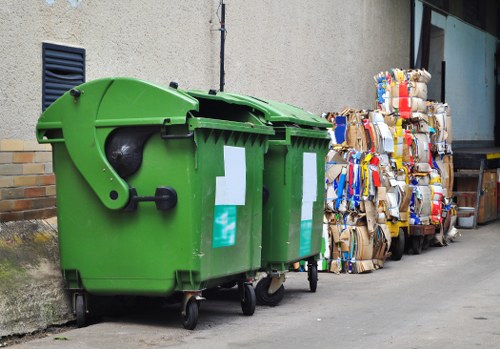
Commercial waste is not limited to front-of-house spaces. Many businesses use garages, lofts, storerooms, cupboards and back areas to hold archive material, spare fittings, old displays or packaging that has accumulated over time. A clearance in these areas can recover usable space and remove items that are no longer needed without changing the rest of the premises. It is often the sort of work that is easy to postpone but straightforward once scheduled.
We can help with garage clearance and loft clearance where the items are stacked away from normal trading space, as well as office clearance when storage rooms sit alongside work areas. These services are useful when the waste is not regular enough for recurring collections, but still needs a structured approach that deals with the contents safely and efficiently.
Access matters in these spaces, especially if items have been stored for a long time. Narrow stairs, low headroom, tight doors or awkward parking may influence how the clearance is planned. That does not make the job unsuitable; it simply means the quotation should reflect the conditions that will actually apply when the waste is moved.
Pricing, quotations and what affects the cost
Commercial waste quotations are usually influenced by the amount of material, the type of waste, the lifting involved and any access issues that affect collection. A small recurring bag collection and a one-off bulky clearance are different tasks, even if they start from the same premises. The more precisely the waste is described, the easier it is to recommend the right arrangement rather than a broad estimate that may not fit the job.
Our pricing and quotes page is helpful if you want a clearer sense of how the service is typically assessed. For many customers, the most useful information is simple: what is being removed, whether it is bagged or bulky, how much space it occupies and whether there are any items needing separate disposal. That is often enough to begin a sensible conversation.
If you are comparing options, remember that the cheapest-looking plan is not always the most practical one when the waste stream is mixed or awkward. A well-matched service can reduce handling problems and avoid paying for capacity you do not need. The best starting point is usually a clear list, then a quotation based on the actual work required.
Recycling, sorting and responsible disposal
Commercial waste removal works best when recyclable material is kept distinct from general rubbish where possible. Cardboard, paper, metal and some rigid plastics may be suitable for separate handling, while mixed waste and contaminated material need a different route. Sorting at source can support more efficient collections and helps make the disposal process clearer from the start.
If environmental handling is important to your business, our recycling and sustainability page explains the broader approach to material separation and disposal. That does not mean every item can be recycled, but it does mean there is value in understanding what can be set aside before collection day. Where waste is mixed, the collection can still proceed; it simply needs to be described accurately.
One practical step helps most: keep any reusable or separately recyclable items apart from the main waste pile. Doing so avoids confusion when the load is assessed and makes it easier to match the service to the material actually on site. It is a small habit that can improve both efficiency and clarity.
About Raynes Park
Raynes Park is a district in southwest London within the London Borough of Merton, positioned between Wimbledon and New Malden and served by Raynes Park station on the South Western Main Line. Its growth was shaped by late nineteenth- and early twentieth-century suburban development, with the arrival of the railway encouraging housing and local commerce around a transport corridor that still structures the area today. The place name is often associated with the former Raynes Park House, a historic estate that gave the district its identity before urban expansion changed the landscape. The area contains a mixture of residential streets, local shopping parades and community facilities, and its character is strongly linked to the pattern of suburban London planning rather than to one dominant centre. Nearby Cottenham Park, Cannon Hill Common and Wimbledon Common contribute open green space in the wider locality, while the Beverley Brook corridor connects parts of the district to a longer river system running through southwest London. Architectural variety is visible in the street scene, where Victorian and Edwardian terraces sit alongside later interwar and post-war housing. The neighbourhood also has a practical commuter identity because the station provides a direct rail link into central London, and local roads connect to surrounding districts including Wimbledon Chase, West Barnes and Motspur Park. This combination of rail access, residential density and layered urban development gives Raynes Park a distinctly suburban London profile shaped by movement, housing growth and everyday local life.
Trade waste for premises that need a tidier routine
Some businesses need waste removed as part of a regular operating rhythm rather than as a one-off clear-out. That may mean repeat collections for mixed general rubbish, occasional bulky removal after deliveries, or a scheduled reset for storage and back areas. The most useful service is the one that fits the pattern of waste generation, not the one that forces your premises into a fixed template.
Where there is variety in the load, it helps to think in terms of categories: ordinary commercial rubbish, furniture, appliances, confidential material and project debris. Keeping those groups distinct lets you choose the right route for each one, whether that is a general collection or a more specific service such as hazardous waste disposal for material that needs a separate handling decision. If you are unsure which category a particular item belongs to, describe it plainly and let the collection be planned around the facts.
For most customers, the next step is simple. Make a short note of the items, the approximate quantity and the access conditions, then ask for a quotation in the way that suits you. If the job is small, that may be enough on its own. If it is larger or more varied, a clearer breakdown will help produce a better result, so request a quotation when you are ready.
Commercial collections for different types of premises

Different premises create different waste patterns. A small office may need help with paper, packaging and occasional furniture. A retail unit may produce cardboard, display items and unsold stock. A hospitality venue may need frequent general waste removal and help with large items when layouts change. The service should adapt to the setting rather than forcing every site into the same arrangement.
We also offer related pages for broader commercial and domestic-style clearances where a mixed property has different kinds of waste at once, including garden clearance for outdoor areas associated with commercial premises or managed properties. Where waste arises from multiple spaces, the best approach is often to separate the work into sensible parts so each load is handled appropriately instead of being forced into one broad label.
When you are ready to move ahead, use the details you already have: the type of waste, the amount, the room or area involved and any item that needs separate attention. That is enough to begin a practical quotation. If you want to keep things straightforward, send the information together and ask for the next available option to remove it all.